


In today’s complex business landscape, a deep understanding of customer needs is essential for sustainable growth. However, a one-size-fits-all approach no longer meets the demands of diverse consumer preferences. Customer segmentation—categorizing customers based on shared characteristics—has become a foundational strategy for businesses seeking to refine their approach, increase customer satisfaction, and drive growth. This article delves into the importance of customer segmentation, the types of segmentation, and how to use segmentation effectively to fuel business success.
1. Understanding Customer Segmentation and Its Role in Business Growth
At its core, customer segmentation involves dividing a broad customer base into subgroups with shared characteristics. By understanding the unique preferences, needs, and behaviours of each segment, businesses can deliver more targeted and effective strategies. This refined focus enhances customer satisfaction and loyalty, leading to higher retention rates and, ultimately, sustained revenue growth.
Why Segmentation Matters:
- Increases Customer Engagement: Tailored marketing and product offerings resonate better with specific customer groups, increasing engagement.
- Optimizes Marketing Spend: Segment-specific campaigns help businesses allocate resources more efficiently, reducing wastage and improving ROI.
- Enhances Product Development: By understanding different customer needs, companies can develop products and services that meet distinct demands.
 Amazon leverages segmentation to create personalized shopping experiences for millions of customers. Using data on past purchases, browsing history, and location, Amazon tailors product recommendations to individual users. This personalized approach has become a key driver of Amazon’s global success.
2. Types of Customer Segmentation: Choosing the Right Approach
While there are many ways to segment customers, choosing the right type depends on the nature of the business, industry, and target audience. Here are some commonly used segmentation methods:
(A) Demographic Segmentation
Segmenting customers based on demographic factors like age, gender, income, education, and occupation is one of the most straightforward approaches. Demographic segmentation is particularly effective for businesses offering products with broad appeal, allowing them to refine messaging based on common characteristics.
(B) Geographic Segmentation
In geographic segmentation, customers are grouped by location, such as country, region, or city. Geographic segmentation is useful for companies operating in diverse regions, where cultural preferences or climate differences impact purchasing decisions.
(C) Behavioural Segmentation
Behavioural segmentation groups customers based on their behaviour with a brand or product, such as buying patterns, loyalty, and usage frequency. This method is highly effective for businesses aiming to identify high-value customers and encourage brand loyalty through targeted promotions or rewards.
(D) Psychographic Segmentation
Psychographic segmentation considers factors like lifestyle, values, attitudes, and interests. By understanding customers’ personalities and preferences, businesses can create more meaningful and resonant campaigns that align with their core motivations.
 Nike’s success lies in its effective use of psychographic segmentation. Rather than just targeting customers based on age or income, Nike appeals to customers’ active lifestyles and aspirational mindsets. This segmentation allows Nike to create emotional connections with its audience, resulting in higher brand loyalty.
3. Leveraging Data for Effective Segmentation
Data is the backbone of any successful segmentation strategy. With advancements in data analytics, AI, and machine learning, businesses can access granular insights that drive precise segmentation and deeper understanding of each customer segment’s needs.
Steps for Data-Driven Segmentation:
- Collect Comprehensive Data: Leverage first-party data from customer interactions, purchase history, and website behaviour. Supplement this with third-party data to gain a fuller picture.
- Use Analytics Tools: CRM systems, predictive analytics, and data visualization tools help organize and interpret data, making it easier to identify patterns and trends.
- Apply Machine Learning: AI-driven tools can enhance segmentation by identifying nuanced customer patterns that might be missed by manual analysis. Machine learning algorithms, for instance, can predict customer behaviours, enabling proactive engagement.
 Netflix uses behavioural data to recommend content tailored to individual user preferences. By analyzing viewing history, preferences, and engagement patterns, Netflix creates highly personalized experiences that keep users engaged, leading to a significant reduction in customer churn.
4. Creating Targeted Marketing Strategies for Each Segment
Once segments are defined, creating targeted marketing strategies that speak directly to each segment’s needs becomes paramount. Personalized marketing fosters customer loyalty and improves the effectiveness of campaigns.
Key Approaches:
- Customized Messaging: Develop unique messaging for each segment that aligns with their preferences. For instance, a segment interested in eco-friendly products will respond well to sustainability-focused messaging.
- Channel Optimization: Use data to identify preferred channels for each segment, whether it’s email, social media, or in-app notifications. By reaching customers on their preferred platforms, engagement increases significantly.
- Differentiated Value Propositions: Adapt your value propositions to match each segment’s needs. High-income consumers may value premium service, while budget-conscious customers seek value for money.
 Sephora’s loyalty program segments customers by purchasing behaviour, tailoring offers based on their engagement levels. High-spending customers receive exclusive perks, while new customers receive discounts to encourage repeat purchases. This segmentation-driven strategy has strengthened Sephora’s brand loyalty.
5. Measuring the Impact of Segmentation on Business Growth
Tracking the effectiveness of segmentation efforts is critical for continuous improvement and business growth. By measuring key performance indicators (KPIs) associated with each segment, businesses can refine their strategies and ensure a positive return on investment.
Key Metrics to Track:
- Customer Lifetime Value (CLV): Calculating the projected revenue from each segment helps in allocating resources effectively and identifying high-value customer groups.
- Engagement Rates: Track how frequently customers from each segment interact with your brand. Higher engagement rates typically indicate successful targeting.
- Conversion Rates: Measure the conversion rates from targeted campaigns to assess how well each segment responds to tailored messaging.
- Retention Rates: High retention rates indicate that segmented offerings resonate with customers, fostering loyalty.
 HubSpot regularly tracks engagement and conversion rates for its different customer segments, allowing it to refine its marketing strategies. By focusing on high-potential segments, HubSpot has been able to grow its customer base while optimizing marketing costs.
Key Takeaways for Implementing Effective Segmentation
Successfully implementing customer segmentation requires a thoughtful, data-driven approach. Here are a few key takeaways for leveraging segmentation to drive business growth:
- Begin with Clear Objectives: Define what you want to achieve through segmentation, whether it’s improved retention, increased revenue, or enhanced engagement.
- Invest in Data Analytics: Advanced analytics are invaluable for uncovering meaningful insights that inform precise segmentation.
- Iterate and Improve: Continuously test, measure, and adjust your segmentation strategy to keep up with evolving customer needs and market dynamics.
- Prioritize High-Value Segments: Direct more resources to segments that provide the highest return on investment to maximize efficiency and impact.
Think of Customer Segmentation as a Growth Catalyst
Customer segmentation is not merely a tool but a growth catalyst in the modern business landscape. By dividing a diverse customer base into segments that share similar traits, companies can tailor their products, services, and marketing efforts to meet each segment’s unique needs. This precision targeting enables businesses to deepen customer loyalty, increase satisfaction, and ultimately drive sustained growth. In a world where customer expectations are continually evolving, segmentation allows businesses to stay agile and relevant. By leveraging data, adapting marketing strategies, and consistently measuring outcomes, companies can build meaningful customer relationships that foster long-term success.
About Strategy Studio
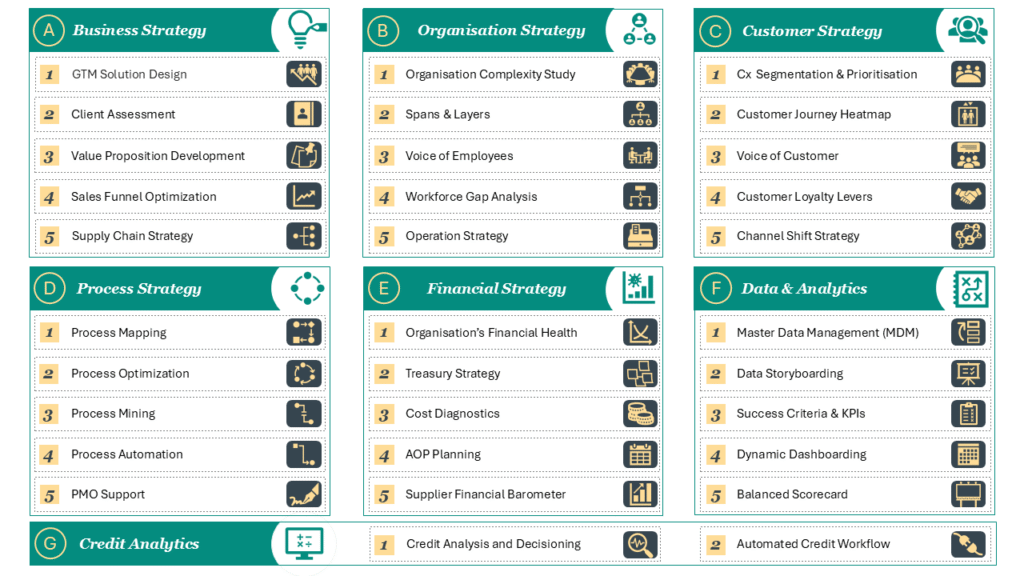
At Strategy Studio, we help CXOs to solve complex business problems – from growth strategy and customer experience to financial transformation, process optimisation, and credit analytics. Our work blends rigorous analysis, practical execution, and deep functional expertise. To exlpore, schedule a free 30 minutes exploratory discussion HERE.

How to Assess Your Organization’s Financial Health for Strategic Growth
Why financial health has become a strategic constraint, not a reporting exercise Most organizations believe they understand their financial health

Cost Diagnostics: Identifying and Reducing Hidden Costs
Cost has returned to the centre of boardroom conversations, but not for the reasons many leaders assume. This is

Designing the Liquid Enterprise – Creating Organizations That Can Reconfigure Themselves in Real Time
For years, executives have described their organizations as “agile,” “adaptive,” or “responsive.” Yet in moments of disruption, many discover