


Organizational transformation is complex and demands leadership at its best, especially from those at the executive level. CXOs, who often set the tone and culture, play a critical role in guiding their teams through change. From fostering alignment and managing resistance to embracing innovation and agility, successful transformation requires CXOs to lead with conviction, strategic vision, and adaptability. This article explores essential strategies that empower CXOs to lead transformation efforts with confidence and ensure long-term success.
1. Start with Visionary Leadership: Setting a Clear and Compelling Vision
Transformation begins with a clear and compelling vision that aligns with both the company’s long-term strategy and its immediate operational goals. A well-articulated vision not only clarifies the purpose behind the transformation but also inspires confidence among employees, investors, and other stakeholders.
 When Satya Nadella took over as CEO of Microsoft, he recognized that the company needed a cultural shift toward innovation and customer-centricity. By articulating a vision focused on cloud computing and the democratization of technology, Nadella inspired a renewed sense of purpose. This vision underpinned Microsoft’s successful transformation, propelling it into a leading force in the tech world.
Practical Steps
Define the “Why”: Explain the reasons behind the transformation, such as staying competitive, adapting to market trends, or improving customer experiences.
Communicate Consistently: Regularly communicate the vision through town halls, newsletters, and other channels to keep everyone aligned.
Align with Strategic Goals: Make sure the transformation supports broader business goals, such as revenue growth, digital expansion, or sustainability.
2. Building a Transformation-Ready Culture: Cultivating Agility and Openness
For a transformation to be successful, the organization’s culture must embrace change rather than resist it. Cultural transformation often entails shifting mindsets, breaking down silos, and fostering a growth-oriented approach across all levels of the organization. CXOs should model these values by demonstrating a commitment to adaptability, innovation, and collaboration.
 According to a recent Deloitte study, 82% of companies see culture as a competitive advantage, yet only 19% believe they have the right culture for their transformation goals. This gap underscores the need for CXOs to champion a transformation-ready culture actively.
Key Elements of a Transformation-Ready Culture
Agility: Emphasize flexibility in workflows and decision-making processes to adapt to new challenges quickly.
Openness to Innovation: Encourage experimentation and calculated risk-taking to foster innovation.
Cross-Functional Collaboration: Break down departmental silos to enable collaboration and a shared understanding of transformation goals.
3. Prioritize Stakeholder Engagement: Securing Buy-In at Every Level
An effective transformation requires broad support across the organization, from frontline employees to board members. To achieve this, CXOs must actively engage stakeholders, addressing concerns, clarifying expectations, and ensuring alignment with the transformation’s objectives.
 IBM’s shift from hardware to software and services required widespread stakeholder buy-in. The company’s leadership engaged employees through regular updates, empowered managers to make decisions in line with the transformation, and continuously sought feedback to gauge and address morale and alignment. This transparent and inclusive approach strengthened the organization’s commitment to its new direction.
Actionable Steps:
Identify Key Stakeholders: Recognize influential stakeholders within and outside the organization whose buy-in is critical.
Involve Stakeholders in Planning: Include representatives from each level in planning sessions to gain input and identify potential challenges early.
Use Clear Metrics for Accountability: Communicate progress transparently through regular updates and success metrics to maintain accountability and foster trust.
4. Address Resistance Head-On: Understanding and Managing Change Fatigue
Resistance to change is a natural reaction, particularly if previous change initiatives have failed. CXOs must approach resistance with empathy, providing clear communication, actively listening to concerns, and offering support to employees as they navigate the challenges of transformation.
Common Forms of Resistance
Fear of Job Loss: Employees may worry about job security or role changes.
Comfort with Established Processes: Teams that are accustomed to specific workflows may resist new ones.
Change Fatigue: For organizations that have undergone multiple transformations, employees may feel exhausted or sceptical about the success of the latest one.
Strategies to Manage Resistance
Create a Safe Environment for Feedback: Allow employees to express concerns openly without fear of repercussions.
Provide Continuous Support: Offer resources like training, mentorship, and well-being programs to ease the transition.
Celebrate Milestones: Recognize and reward teams who adapt well, reinforcing positive momentum.
5. Establish Data-Driven Transformation Metrics
Transformational leadership requires more than intuition; it demands data-driven decision-making. Metrics offer visibility into how the transformation is progressing and enable CXOs to make adjustments as needed. Establishing key performance indicators (KPIs) specific to the transformation effort allows leaders to track the impact on both organizational performance and employee engagement.
Essential Transformation Metrics
Employee Engagement Levels: Monitor engagement through regular surveys and focus groups to gauge morale and identify areas needing additional support.
Customer Satisfaction Scores: Track how the transformation impacts customer experiences and satisfaction.
Time to Value: Measure how quickly changes result in tangible benefits, such as increased efficiency or revenue growth.
Transformation ROI: Calculate the financial return of the transformation, factoring in both the costs and revenue generated.
 Coca-Cola’s data-driven approach during its digital transformation included real-time tracking of customer feedback and product performance, allowing the company to pivot based on insights and continuously improve its customer experience.
6. Continuous Learning and Agility: The Cornerstones of Sustainable Transformation
In a rapidly evolving market, transformation is an ongoing journey rather than a one-time event. For CXOs, fostering a culture of continuous learning and agility ensures the organization remains resilient and adaptable in the face of ongoing change.
Build a Learning Organization
Promote a learning culture by encouraging skill development, knowledge sharing, and adaptability. According to research by Harvard Business Review, companies that prioritize learning report 46% higher adaptability during transformations.
Develop Agile Leadership
Encourage leaders to adopt agile principles, enabling teams to respond quickly to feedback, experiment with new ideas, and course-correct as needed.
Practical Tips
Promote Cross-Functional Learning: Encourage employees to learn from other departments to build a holistic understanding of the transformation.
Emphasize Agility in Decision-Making: Train leaders to make flexible, data-informed decisions, balancing short-term adjustments with long-term goals.
Foster a Growth Mindset: Encourage continuous improvement and a willingness to experiment, especially in uncertain situations.
As a CXO, are you leading with confidence and vision?
Leading organizational transformation is a demanding yet rewarding endeavour for CXOs, requiring a balanced approach that combines vision, agility, and stakeholder engagement. By setting a clear direction, building a transformation-ready culture, actively managing resistance, and embracing data-driven metrics, CXOs can navigate the complexities of change with confidence. Transformation is rarely a straightforward process, but the most successful CXOs lead with an adaptable, resilient mindset, viewing each challenge as an opportunity to reinforce alignment, innovation, and growth. In today’s dynamic market, those who approach transformation strategically – prioritizing people, data, and long-term impact – position their organizations for sustainable success in an era defined by continuous change.
About Strategy Studio
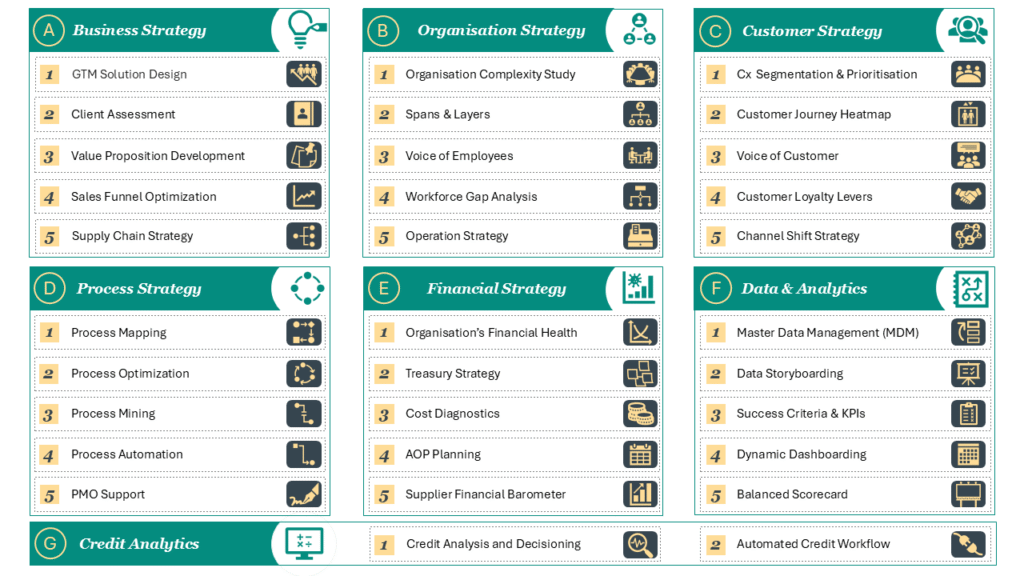
At Strategy Studio, we help CXOs to solve complex business problems – from growth strategy and customer experience to financial transformation, process optimisation, and credit analytics. Our work blends rigorous analysis, practical execution, and deep functional expertise. To exlpore, schedule a free 30 minutes exploratory discussion HERE.

How to Assess Your Organization’s Financial Health for Strategic Growth
Why financial health has become a strategic constraint, not a reporting exercise Most organizations believe they understand their financial health

Cost Diagnostics: Identifying and Reducing Hidden Costs
Cost has returned to the centre of boardroom conversations, but not for the reasons many leaders assume. This is

Designing the Liquid Enterprise – Creating Organizations That Can Reconfigure Themselves in Real Time
For years, executives have described their organizations as “agile,” “adaptive,” or “responsive.” Yet in moments of disruption, many discover