


In the evolving landscape of customer-centric business models, understanding the “Voice of Customer” (VoC) has become indispensable. VoC goes beyond capturing feedback; it is a robust strategic asset that informs key decisions, drives innovation, and aligns business operations with customer needs. With global competition increasing and customer expectations continually shifting, those who fail to harness VoC insights risk becoming disconnected from the very markets they seek to serve. This article delves into why VoC is essential for modern strategy, how to collect and interpret VoC data effectively, and actionable ways to integrate VoC insights across an organization’s strategic decision-making processes.
1. Why Voice of Customer is a Strategic Imperative
Today’s customers are more empowered, informed, and discerning than ever before. With digital platforms amplifying customer voices, feedback can instantly shape perceptions and influence purchasing decisions across global markets. Therefore, understanding the VoC is no longer optional but a strategic imperative.
The Changing Consumer Landscape
Modern customers demand not only product satisfaction but also brand alignment with their values, such as sustainability, inclusivity, and ethical sourcing. For example, Deloitte’s Global Millennial Survey 2022 highlights that nearly 65% of millennial consumers consider corporate social responsibility a key factor in their purchasing choices. Consequently, the VoC becomes a guiding principle for adapting to these evolving priorities.
Competitive Differentiation through VoC
Differentiation is paramount in an increasingly commoditized world. By closely attuning to the VoC, companies can carve out unique positioning based on actual customer sentiment, not assumptions. VoC-led differentiation is a dynamic, responsive strategy that changes in lockstep with customer needs and market trends, creating a loyal customer base less susceptible to competitive poaching.
2. VoC as a Compass for Organizational Strategy
When incorporated into strategic planning, VoC is a navigational tool that keeps the business aligned with its core market. Here are the key ways in which VoC strengthens strategic alignment:
Driving Customer-Centric Innovation
VoC doesn’t just address current needs; it also sheds light on emerging trends and unmet demands, giving companies foresight into potential market shifts. For instance, Amazon’s product development is heavily rooted in VoC. By analyzing user reviews, search patterns, and purchasing behaviors, Amazon identifies gaps in its offerings and refines products to serve those specific needs better.
Enhancing Risk Management
Strategic decisions carry inherent risks, particularly when expanding to new markets or launching new products. VoC data minimizes these risks by acting as an early warning system. If a product feature, pricing strategy, or marketing approach doesn’t resonate with a segment, VoC insights provide timely feedback, allowing leaders to recalibrate their strategies before costly missteps occur.
Fostering Organizational Agility
The insights gathered through VoC encourage companies to maintain a nimble approach, enabling rapid course adjustments. Agile organizations are those that thrive on continuous learning, and VoC feeds this by regularly updating leaders on changing customer preferences, competitive moves, and macroeconomic factors affecting customer behaviors.
About Strategy Studio
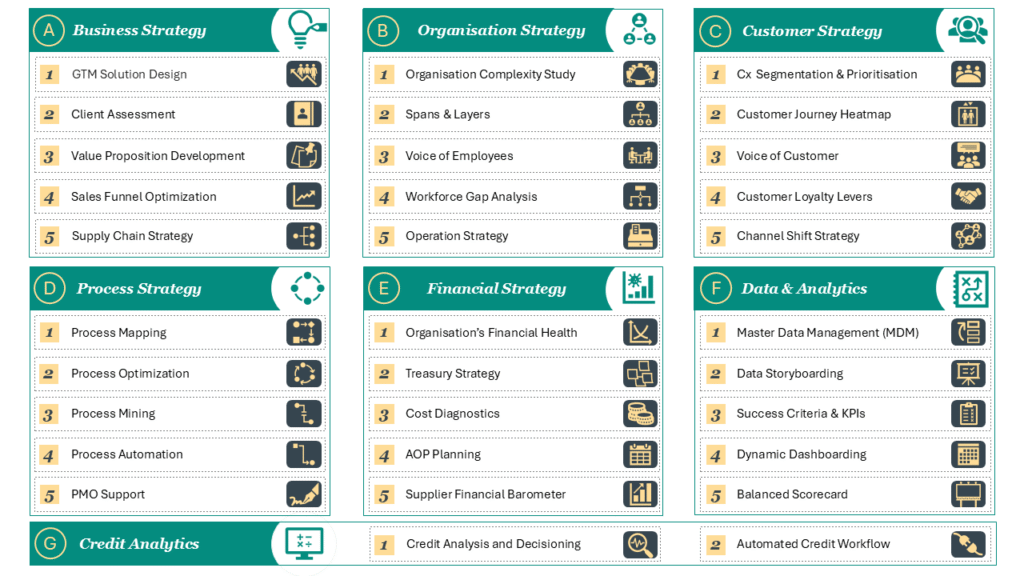
At Strategy Studio, we help CXOs to solve complex business problems – from growth strategy and customer experience to financial transformation, process optimisation, and credit analytics. Our work blends rigorous analysis, practical execution, and deep functional expertise. To exlpore, schedule a free 30 minutes exploratory discussion HERE.

How to Assess Your Organization’s Financial Health for Strategic Growth
Why financial health has become a strategic constraint, not a reporting exercise Most organizations believe they understand their financial health

Cost Diagnostics: Identifying and Reducing Hidden Costs
Cost has returned to the centre of boardroom conversations, but not for the reasons many leaders assume. This is

Designing the Liquid Enterprise – Creating Organizations That Can Reconfigure Themselves in Real Time
For years, executives have described their organizations as “agile,” “adaptive,” or “responsive.” Yet in moments of disruption, many discover